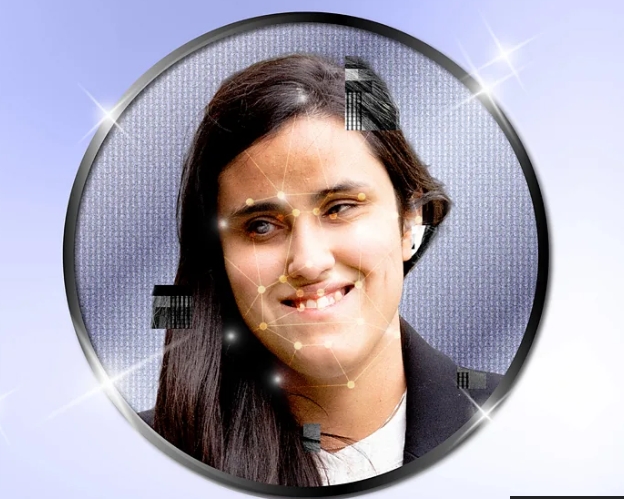





Artificial intelligence (AI) is increasingly helping blind people access visual feedback about their bodies, sometimes for the first time. However, the emotional and psychological impacts are just beginning to emerge.
For many blind individuals, the use of AI tools to gather feedback about their appearance has become a part of their daily routine. One such example is the app Be My Eyes, which helps users analyze photos of themselves. This app uses AI to describe their skin, makeup, or overall appearance, providing feedback about their body in ways that were previously inaccessible. Lucy Edwards, a blind content creator, shared that AI allows her to receive detailed feedback about her skin and even compare herself to traditional beauty standards.
Despite the empowerment these AI tools offer, experts in psychology warn that the constant comparison to traditional beauty standards may lead to dissatisfaction with one’s body image. For example, AI models have been shown to reinforce idealized Western body shapes, often promoting a narrow view of beauty. This can be particularly troubling for blind users, who rely on these descriptions to understand their bodies but may struggle with the lack of context and subjectivity in AI feedback.
Moreover, the use of AI tools may create pressure to conform to unrealistic beauty standards. “We know that the more pressure people feel about their bodies, the more mental health problems such as depression and anxiety increase,” explains psychologist Helena Lewis-Smith. For blind people, who have previously lacked the ability to see themselves, these tools may introduce a new level of anxiety about how they look.
Nevertheless, the ability to control how AI describes them can also be empowering. Users can request the AI to describe their appearance in various ways, even asking for romantic or poetic descriptions. But this control may have its drawbacks, as it could lead to negative body image if users are constantly seeking approval or changing their appearance to meet beauty standards.
1.What is the primary benefit of AI tools for blind people?
- AI tools help blind people find beauty in others.
- AI tools allow blind people to access visual feedback about their appearance.
- AI tools make it easier for blind people to navigate the world.
- AI tools enable blind people to receive professional makeup advice.
2.How does AI feedback about one’s appearance affect blind people, according to psychologists?
- It increases self-confidence and reduces mental health problems.
- It often leads to dissatisfaction with body image, especially through comparisons to traditional beauty standards.
- It helps blind people embrace their unique appearance without comparison.
- It encourages blind people to stop using beauty products.
3.What is one concern experts have regarding the use of AI tools by blind people?
- AI tools may make blind people feel more isolated.
- AI tools could reinforce unrealistic beauty standards and lead to body dissatisfaction.
- AI tools may encourage blind people to stop caring about their appearance.
- AI tools could prevent blind people from learning about fashion and makeup.
4.How does Lucy Edwards feel about using AI to analyze her appearance?
- She feels disconnected from her appearance and uninterested in feedback.
- She feels empowered by the ability to receive feedback about her skin and appearance.
- She finds the AI feedback irrelevant and not helpful for her daily routine.
- She is frustrated by the constant comparison to traditional beauty standards.
5.What is one potential downside of controlling how AI describes oneself, according to Edwards?
- It can prevent blind people from seeing their true appearance.
- It can lead to changes in body image based on AI’s approval, leading to insecurity.
- It could make users avoid using the AI tools entirely.
- It encourages users to reject the use of technology for self-improvement.
答案解析:
- What is the primary benefit of AI tools for blind people?
答案:B. AI tools allow blind people to access visual feedback about their appearance.
解析: 文中提到,AI工具帮助盲人获取关于自己外貌的视觉反馈,这是盲人以前无法接触到的信息。因此,B选项正确。其他选项并没有直接提到AI工具对盲人外貌反馈的作用。
- How does AI feedback about one’s appearance affect blind people, according to psychologists?
答案:B. It often leads to dissatisfaction with body image, especially through comparisons to traditional beauty standards.
解析: 心理学专家指出,盲人使用AI工具获取身体反馈时,常常会与传统的美学标准进行比较,这可能导致他们对自己身体形象的不满。B选项准确地反映了这一点。其他选项没有体现出专家对AI反馈的警告。
- What is one concern experts have regarding the use of AI tools by blind people?
答案:B. AI tools could reinforce unrealistic beauty standards and lead to body dissatisfaction.
解析: 专家担心,AI工具可能强化不现实的美学标准,进而引发盲人对自己身体形象的不满,尤其是AI倾向于推崇西方审美标准。B选项准确表达了这一点。A、C、D选项与文中专家的担忧不符。
- How does Lucy Edwards feel about using AI to analyze her appearance?
答案:B. She feels empowered by the ability to receive feedback about her skin and appearance.
解析: Lucy Edwards表示,AI让她能够获取关于自己皮肤和外貌的详细反馈,且这种能力让她感到赋权。因此,B选项正确。其他选项没有体现她从AI工具中获得的正面感受。
- What is one potential downside of controlling how AI describes oneself, according to Edwards?
答案:B. It can lead to changes in body image based on AI’s approval, leading to insecurity.
解析: Edwards提到,虽然控制AI描述的方式可能给盲人带来赋权,但如果过度依赖AI的反馈,可能会导致对自己形象的过度依赖,进而影响自信心。B选项准确反映了这一潜
在的负面影响。其他选项与文中Edwards的观点不符。









暂无评论内容